

Some pets are born with sensory limitations; others lose vision or hearing gradually as they age, or suddenly following illness or injury. Either way, the adjustment period, for your pet and your household, is real. What many families discover, sometimes to their relief and sometimes to their surprise, is that pets adapt to sensory loss far better than people expect. Dogs navigate familiar spaces with confidence using scent and memory; deaf cats develop keen visual awareness. The challenge is not usually your pet. It is figuring out how to communicate, train, and keep them safe in a world designed around senses they no longer have.
At Arcata Animal Hospital, we have helped many families navigate this adjustment, and we believe that big-city veterinary medicine and small-town care are not mutually exclusive. Our diagnostics and testing help us understand the extent and cause of sensory changes so we can shape the right plan for what comes next. If your pet has hearing or vision loss, reach out to our team. We can help you build a plan that actually works for both of you.
Need-to-Know Information
- Most pets adapt to sensory loss far better than families expect, particularly when the change happens gradually; the harder adjustment is usually for the household figuring out how to communicate and keep their pet safe.
- Some causes of vision and hearing loss are treatable or reversible if caught early (cataracts, glaucoma, optic neuritis, ear infection-related hearing loss), which is why a clear diagnosis matters before assuming sensory loss is permanent.
- Sudden vision loss, eye redness or squinting, acute deafness, or any sensory change paired with overall illness warrants same-day evaluation; gradual age-related changes can be evaluated at a routine visit.
- Practical environment changes (consistent furniture placement, scent markers, hand signals, hand-to-pet touch cues, blocked stairs) produce more day-to-day quality of life improvement than almost any medication.
What Causes Blindness in Pets?
Vision changes in dogs and cats fall into a few major categories, and identifying which one matters because treatment options vary considerably.
- Cataracts: one of the most well-known causes, particularly in older dogs and dogs with diabetes. They cause the lens to become opaque and progressively block light from reaching the retina. Many cataracts are surgically treatable, with referral to a veterinary ophthalmologist for assessment.
- Progressive retinal atrophy (PRA): an inherited degeneration of the retina in both dogs and cats that gradually causes vision loss, often starting with night blindness. It is most commonly seen in specific breeds and tends to progress slowly over months to years.
- Sudden Acquired Retinal Degeneration Syndrome (SARDS): causes acute, complete blindness over a few days to weeks, often in middle-aged dogs. The cause is not fully understood, and unfortunately treatment options are limited.
- Optic neuritis: inflammation of the optic nerve can cause sudden vision loss and is sometimes treatable if caught early. This is one of the reasons that acute blindness is always worth same-day evaluation rather than waiting.
- Glaucoma: raises pressure inside the eye and can permanently damage vision in days if untreated. It is painful and an emergency.
- Retinal Detachment: due to head trauma, high blood pressure, diabetes, and many more diseases
- Uveitis: Inflammation in the eye, due to underlying diseases like FIV and FeLV in cats, tick-borne diseases, leptospirosis, fungal infections, parasites, or trauma
- Neurologic conditions: brain tumors, epilepsy, anesthetic events, strokes, trauma, and more
Our in-house diagnostics and testing help work through the differential efficiently.
What Causes Deafness in Pets?
Hearing loss in dogs and cats has a different set of common causes.
- Congenital deafness: present from birth and most common in white-coated breeds and pets with certain coat patterns. Dalmatians, Australian Cattle Dogs, Bull Terriers, and predominantly white cats with blue eyes are well-documented examples. Puppies and kittens born deaf often adapt seamlessly because they have never known anything different.
- Age-related hearing loss (presbycusis): develops gradually in senior pets and typically affects high frequencies first. Many older dogs become selective responders before you realize they actually cannot hear well.
- Chronic ear disease: one of the most common causes we see in adult pets. Untreated ear infections, severe inflammation, or repeated yeast and bacterial cycles can damage the middle and inner ear over time and cause narrowing of the ear canal
- Noise-induced hearing loss: Hunting dogs, military, and working dogs frequently exposed to loud noises can lose hearing over time
- Neurologic and endocrine conditions: Head trauma and certain conditions like Hypothyroidism Cushing’s Disease, and acromegaly in cats can all alter blood flow to the brain and ears, inducing hearing loss
- Drug-induced or anesthesia-induced hearing loss: rare but possible with certain medications and procedures; common in pets treated with OTC or homemade ear remedies without checking to make sure the ear drum (tympanic membrane) is intact
Twice-yearly senior exams as part of regular wellness care help catch the gradual changes that are easy to miss day to day.
How Are Vision and Hearing Loss Diagnosed?
A complete evaluation usually combines hands-on assessment with targeted testing to figure out the cause, the extent of the loss, and whether anything is treatable. The exact workup depends on what we find on the initial exam, but most cases follow a fairly predictable sequence.
- Ophthalmic exam: tests of pupillary light response, menace response, tracking ability, and direct visualization of the retina and optic nerve.
- Tonometry: measures pressure inside the eye to screen for glaucoma.
- Schirmer tear test: assesses tear production for dry eye, which can affect vision indirectly.
- Bloodwork: rules out systemic causes like diabetes, hypertension, or kidney disease.
- Hearing assessment: a hands-on exam combined with simple sound-response testing helps differentiate true hearing loss from cognitive change. BAER (brainstem auditory evoked response) testing is the definitive test for hearing loss, performed at referral centers when objective documentation is needed (often for breeders or for puppies before placement).
- Imaging: MRI or CT may be useful when neurologic causes are suspected.
Diagnosing vision loss accurately matters because some causes are reversible if caught early, while others guide longer-term home management. Our team coordinates with specialty ophthalmologists and neurologists when advanced workup is the right call.
How Do You Recognize Signs of Vision or Hearing Loss?
Pets compensate remarkably well, which is why these changes often go undetected for longer than you would expect.
Signs of vision loss to watch for:
- Bumping into furniture, especially after rearrangements
- Reluctance to navigate stairs or jump on or off the couch
- Hesitation in low-light conditions
- Cloudy or color-changed eyes (cloudiness alone does not necessarily mean blindness)
- Increased startle response when approached
- Less interest in toys that require tracking
Signs of hearing loss to watch for:
- Not responding to their name
- Sleeping deeply through normal household noise (someone unloading the dishwasher, a doorbell)
- Increased visual checking with you for cues
- Surprised reactions when approached from behind
- Vocalizing more loudly or more frequently
- Less response to other pets in the household
Sensory loss can also raise anxiety, especially in the first weeks of adjustment. If you are seeing any of these patterns, scheduling an evaluation helps us catch causes that may be treatable, and lets us start adapting your plan early.
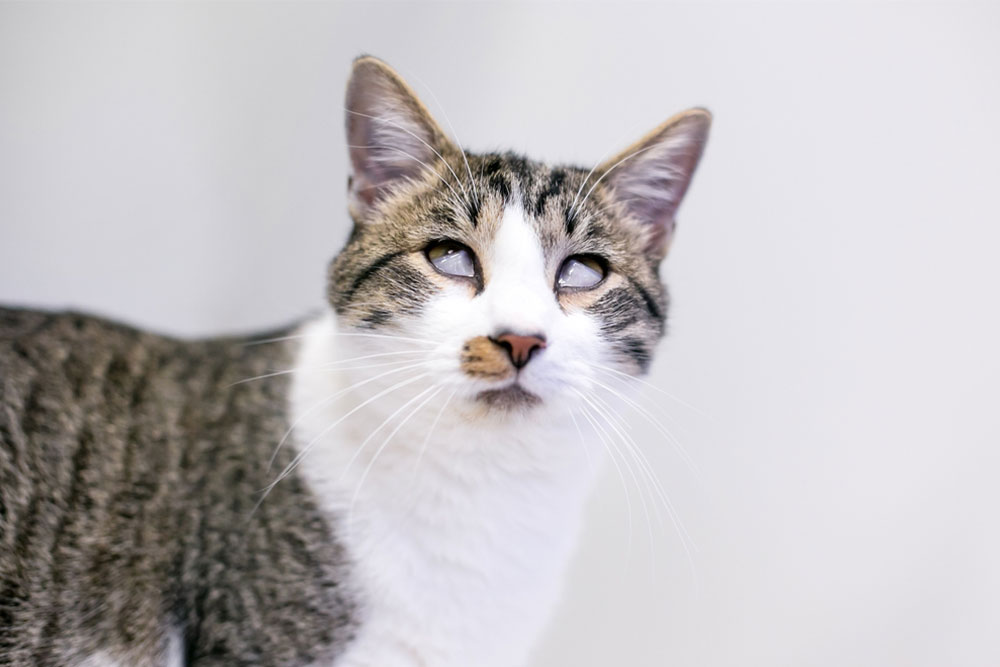
What Home Modifications Make the Biggest Difference?
Practical environment changes are often where the biggest quality-of-life wins live. The right modifications depend on whether your pet is blind, deaf, or both, but a few principles cut across all three situations: consistency, predictability, and using the senses your pet still has.
For Vision Loss
- Keep furniture in the same place: pets memorize the layout of their home. Major rearrangements throw them off and require relearning.
- Use scent and texture markers: a small amount of essential oil (pet-safe) or a specific texture mat near doorways helps pets locate key spots. Mulch and rock pathways help pets know where yard boundaries are.
- Block stairs and pools with baby gates, particularly during the adjustment period
- Use toys with sound and smells to help them play
- Pad sharp corners of low coffee tables and furniture.
- Keep food and water in consistent locations.
- Approach gently with a verbal greeting before touching to avoid startling.
- Use a halo or hoop harness for newly blind dogs who keep bumping into things; these are inexpensive and help them protect their face during the adjustment.
For Hearing Loss
- Develop hand signals in addition to verbal cues. Most deaf dogs learn hand signals beautifully.
- Use vibration cues: a stomp on the floor, a gentle vibration collar with a buzz function, never shock.
- Approach where they can see you to avoid startling, especially when waking them.
- Use a flashlight or porch light flicker to call them back from the yard at night.
- Keep them on leash or in fenced yards since they cannot hear cars or recall over distance.
The Deaf Dogs Rock website has fantastic resources on training and living with deaf pets. Muffin’s Halo, in addition to selling halos, has great articles on living with blind pets.
How Do You Train and Communicate with a Blind or Deaf Pet?
Sensory-impaired pets are fully capable of learning. They just need cues that suit their available senses, and most adapt to new training methods faster than families expect. Focus on positive reinforcement training\- punishment is the wrong way to train, especially blind and deaf pets.
For deaf pets, hand signals work beautifully. The American Sign Language signs for sit, down, and come are common starting points, but any consistent visual cue your pet can see clearly will work. Pair the signal with a treat-based reward consistently, and most dogs pick it up within days. Use facial expressions intentionally; deaf dogs often become very tuned-in readers of human emotion.
For training blind pets, verbal cues become the primary tool. Use a distinct word for each command, with a consistent tone. Touch cues (a tap on a specific shoulder, a finger trail along the back) help with directional guidance. Many blind dogs also benefit from a verbal warning word when approaching obstacles.
Both populations benefit from a slower, more deliberate handling style and from rewarding any voluntary engagement with the world rather than expecting immediate response.
When Should You Seek Veterinary Care?
Some sensory changes can wait for a routine appointment. Others need same-day attention. Same-day or emergency care is appropriate for:
- Sudden vision loss (especially over hours to days)
- Eye redness, squinting, or visible pain
- Cloudiness that appeared suddenly
- Acute deafness with no obvious cause
- New head tilt, stumbling, or circling
- Any of the above paired with overall illness
Gradual age-related changes, on the other hand, can be evaluated at the next routine visit unless they are significantly affecting quality of life.
What Does Quality of Life Look Like for a Blind or Deaf Pet?
The honest, hopeful truth is that most pets with sensory loss continue to live good, full lives. They eat, sleep, play, and connect with their families. The adjustment period can be hard, particularly for you when watching your pet bump into walls or look anxious. But pets are remarkably present in their own experience; they do not grieve the loss the way we do for them. They adapt, often surprisingly quickly.
Periodically reassessing quality of life is helpful both during the early adjustment and over the years that follow. The quality of life scale gives you concrete markers to track: appetite, mobility, interaction with the family, comfort during routine activities. When you have specific things to watch, the assessment feels less subjective and more grounded.
For pets whose quality of life is changing meaningfully, our questionnaire for assessing quality of life and determining when it is time to let go can help you think through what you are seeing, and our end-of-life care services are available when those conversations become part of the picture. We have a Certified Hospice and Palliative Veterinarian on staff who can guide families through it with patience and warmth.
Frequently Asked Questions About Blind and Deaf Pets
Can my pet be both blind and deaf?
Yes. Some pets are born with both conditions; others develop dual sensory loss with age. They still adapt, often by relying more on scent, vibration, and routine. The keys are environmental consistency, gentle handling, and patience during the adjustment.
Will surgery restore my dog’s vision?
Sometimes. Cataract surgery has a high success rate for appropriate candidates and is performed by veterinary ophthalmologists. Most other causes of blindness are not surgically reversible.
How do I keep a blind dog safe outside?
Always on leash or in a fenced yard. Keep walks on familiar routes when possible, and let your dog set the pace. Halo harnesses help during the adjustment phase.
Will my deaf dog learn commands?
Almost certainly. Deaf dogs are excellent learners with hand signals, and many people are surprised at how seamlessly the training translates.
Can I adopt a blind or deaf pet if I am adopting for the first time?
Yes, and many do beautifully. The keys are willingness to be patient, commit to consistent routines, and lean on your veterinary team during the early weeks.
Supporting Your Pet Through Every Stage
Vision and hearing loss do not define what your pet is capable of. They just shape how the relationship works. The pets we see thriving with sensory limitations all have one thing in common: a household that has adjusted with them, made the small modifications that matter, and treated the change as a new chapter rather than an ending.
We are here to help with all of it, from the initial diagnosis to the ongoing adjustments that come with age. No question is too small. Schedule a visit or call us anytime; we love being a steady part of these chapters, and we are always called to care.