
When Coughing or Fatigue May Signal Cardiac Disease
Heart disease in pets rarely announces itself loudly. It tends to begin as a murmur noted during an annual exam, a slight exercise intolerance that gets attributed to age, a cough that seems unrelated to anything significant. By the time breathing difficulty or sudden collapse occurs, the disease has typically been progressing for some time. The earlier heart disease is identified and staged, the more effectively it can be managed, and the more time owners have to make thoughtful decisions rather than urgent ones.
Arcata Animal Hospital is an AAHA-accredited practice in Arcata, CA, combining big-city veterinary medicine with the warmth and continuity of a small-town practice. Our diagnostic ultrasound capabilities allow us to evaluate cardiac structure and function in detail, stage heart disease accurately, and track changes over time, all without the stress of a referral trip. Contact us to schedule a cardiac evaluation or to ask whether a murmur found at a recent exam warrants further workup.
What Is Congestive Heart Failure, and What Does It Actually Mean for Your Pet?
A diagnosis of congestive heart failure can feel like a door closing. It doesn’t have to. Knowing what the term actually means changes the picture significantly, and most owners find that the reality is more manageable than the words first suggested.
Congestive heart failure is not a single disease but rather a description of what happens when the heart’s ability to pump blood efficiently drops enough that fluid begins to accumulate, typically in or around the lungs, or sometimes in the abdomen. That buildup is the “congestion,” and it’s what causes the symptoms owners notice: the nighttime cough, the labored breathing, the dog who used to bound up the stairs and now stops halfway. “Failure” in this context doesn’t mean the heart has stopped. It means it needs help.
The encouraging part is that help works. Medications can remove excess fluid, support the heart muscle, and reduce the workload on an overstressed cardiovascular system. Many pets stabilize quickly once treatment begins and return to a comfortable daily routine. The goal is not to cure the underlying heart disease, which is rarely possible, but to manage it well enough that your pet feels good and continues to enjoy life.
How Does Heart Disease Become Heart Failure?
This is where the timeline matters, and why regular exams make a genuine difference. In most cases, signs of heart disease appear long before a pet is in trouble. The heart is remarkably adaptive. When a valve becomes leaky or a muscle begins to weaken, it compensates, working harder to maintain normal output. During this compensatory phase, pets often look and feel completely fine. There may be a murmur audible on exam, but nothing is obviously wrong at home.
Eventually, compensation has a limit. Fluid begins to accumulate, symptoms emerge, and the disease enters its congestive phase. The earlier a pet is captured in that compensatory window, the more treatment options are available and the more gradual the transition can be. Heart disease diagnosis before symptoms appear gives both the veterinary team and the pet’s family the gift of time.
Auscultation, which is simply listening to the heart with a stethoscope, is part of every wellness exam we perform. A murmur or irregular rhythm detected at a routine visit is often the earliest signal that cardiac monitoring or further workup is worthwhile.
What Causes Heart Failure in Dogs and Cats?
Different heart conditions lead to failure, and the underlying cause shapes the best approach to treatment. Certain breeds carry significantly elevated heart disease risk, making early screening especially relevant. Knowing about breed-specific health risks helps owners and veterinary teams stay appropriately watchful.
Common Heart Diseases by Species and Breed
In dogs, the most frequently encountered cause of congestive heart failure is mitral valve disease, a degenerative condition where the valve between the heart’s left chambers gradually becomes leaky, allowing blood to flow backward instead of forward. Small breeds are disproportionately affected, particularly Cavalier King Charles Spaniels, Dachshunds, Miniature Poodles, and Chihuahuas. Many of these dogs live years with a detectable murmur before symptoms develop, which is a window that monitoring and early treatment can meaningfully extend.
Large-breed dogs are more susceptible to dilated cardiomyopathy, a condition where the heart muscle weakens and the chambers enlarge, reducing the force with which blood is pumped. Dobermans, Boxers, Great Danes, and Irish Wolfhounds carry the highest genetic risk. Arrhythmias in dogs, or abnormal heart rhythms, are a particular concern in Boxers and Schnauzers and can occur alongside structural heart disease or independently.
In cats, hypertrophic cardiomyopathy is the most common cardiac diagnosis, accounting for the majority of feline heart disease. Here the muscle itself thickens and stiffens rather than weakening, which reduces the heart’s ability to fill properly between beats. Maine Coons and Ragdolls have documented genetic predispositions, but any cat can develop it. Cardiac arrhythmias in cats can also occur and sometimes accompany structural disease or develop independently. Both of those conditions are more common in cats with hyperthyroidism.
The reassuring common thread is that all of these conditions respond to medication, and many pets do remarkably well for extended periods with proper management. Starting earlier is simply better.
What About Congenital Heart Defects?
Some animals are born with structural heart problems rather than developing them over time. Congenital heart disorders include malformed valves, septal defects, and conditions like patent ductus arteriosus, a blood vessel that should close naturally after birth but remains open, creating abnormal circulation. When caught early, some congenital defects can be surgically corrected with excellent outcomes. This is one of the many reasons first puppy and kitten exams include careful cardiac evaluation. Our wellness care visits are designed to catch exactly this kind of finding before it creates a problem.
When Other Health Conditions Put Pressure on the Heart
Heart failure doesn’t always originate in the heart itself. Several systemic conditions increase cardiac workload significantly, and managing these alongside heart disease is an important part of comprehensive care.
- Hyperthyroidismis the most common endocrine condition in older cats, and it places sustained, heavy demands on the cardiovascular system. Many hyperthyroid cats have concurrent heart muscle changes that resolve or improve once thyroid levels are controlled. Treating one without addressing the other produces incomplete results.
- Systemic hypertension, or chronically elevated blood pressure, strains blood vessel walls and forces the heart to pump against greater resistance, accelerating both structural and functional changes. Blood pressure screening is part of the cardiac monitoring picture we recommend for senior pets and those with known risk factors.
- Certain cancers can also trigger cardiac complications. Hemangiosarcomain dogs, a malignant tumor of blood vessel cells, frequently involves the heart and pericardium, the sac surrounding the heart, and can cause fluid accumulation around the heart that mimics or complicates heart failure.
Our diagnostics and testing services include the imaging and bloodwork needed to evaluate these possibilities clearly.
Warning Signs: What to Watch for at Home
You know your pet better than anyone, and the changes that matter most are often the ones that feel hard to put into words. Something is just off. Here’s how to organize what you’re seeing and understand its urgency.
Early signs that are worth mentioning at the next visit:
- A soft, regular cough, especially at night or after lying down
- Slowing down on walks or tiring more quickly than before
- Sleeping more and showing less enthusiasm for greetings or play
- Reduced appetite or subtle weight loss
Signs of progression that warrant a prompt call:
- Breathing faster than usual at rest
- Visible belly movement with breaths, or mild wheezing
- Difficulty getting comfortable, shifting positions frequently, or sitting up to breathe
- A swollen or distended abdomen
- Brief episodes of weakness or stumbling
Emergency signs that need immediate attention:
- Reduced exercise tolerancethat worsens suddenly rather than gradually
- Open-mouth breathing or cat panting, which is almost never normal in cats and is a serious warning sign
- Signs of respiratory distress: extended neck, flared nostrils, labored effort with each breath, blue or gray gum color
- Syncope, or fainting and collapsing spells
- For cat owners specifically, be aware of saddle thrombus, a blood clot emergency where sudden paralysis or cold, painful limbs appear.
If you’re seeing emergency signs, call us immediately at (707) 822-2402 during open hours. For after-hours emergencies, call 707-672-6505 for direction to the current on-call facility. Our emergency care page has more information on how to reach the right team quickly.
How Is Heart Failure Diagnosed?
Symptom recognition starts the conversation, but diagnosis requires imaging and testing. Clear information leads to better treatment, and understanding how the heart is actually functioning guides every medication decision.
Cardiac Imaging and Testing
The core diagnostic tools for heart disease include:
- An echocardiogram, or cardiac ultrasound, is the most informative single test for evaluating heart disease. It allows us to watch the heart in motion, measure chamber size and wall thickness, assess how well valves are functioning, and detect fluid accumulation, blood clots, or tumors that might not be visible on X-ray. We perform echocardiography in-house and share findings with a cardiac specialist for interpretation and treatment planning.
- Chest radiographsshow heart size and shape and are particularly useful for visualizing fluid in the lungs, one of the hallmarks of congestive heart failure.
- An electrocardiogramrecords the heart’s electrical activity and helps identify rhythm abnormalities that may require specific treatment or monitoring.
- Bloodworkevaluates kidney and liver function before heart medications are started, since most cardiac drugs interact with how these organs process fluid and waste.
Our diagnostic capabilities mean most of this workup can happen here without a separate referral trip, which matters especially for pets who find travel stressful.
Why Preventive Screening Matters
For senior pets and breeds predisposed to heart disease, preventive testing catches problems before they produce symptoms. A baseline echocardiogram and blood pressure check on a predisposed breed at age five gives us something to compare against when things start to change at age eight. That comparison is often what allows us to act before fluid accumulates rather than in response to it.
ProBNP testing is a blood test that detects markers of cardiac strain before clinical signs appear. It’s a practical screening tool we can run alongside routine wellness bloodwork, and an elevated result is a clear signal that cardiac imaging is warranted. Our wellness care programs for senior and at-risk pets incorporate these conversations at every visit.
What Happens After a CHF Diagnosis?
The first priority is always making breathing easier and reducing the pet’s discomfort. Then the focus shifts to long-term stability.
Initial Stabilization
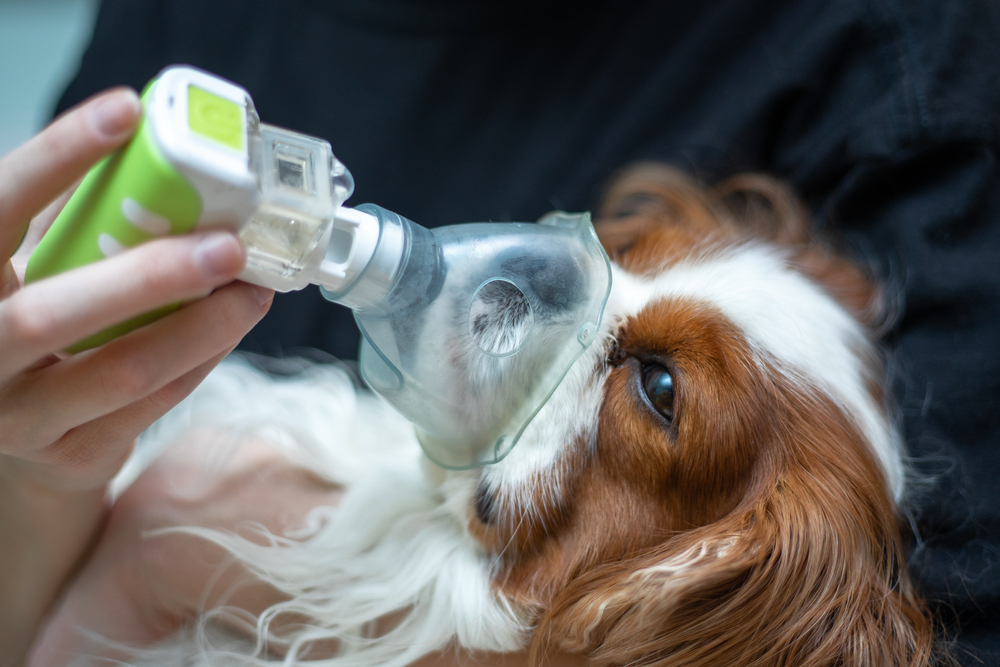
When CHF is first diagnosed or during an acute episode, the immediate goals are removing excess fluid and reducing the cardiac workload. Diuretic medications work quickly to pull fluid out of the lungs. Oxygen support, stress reduction, and close monitoring of breathing rate and heart rhythm help stabilize the pet while medications take effect.
Most pet owners are genuinely surprised by how quickly treatment for CHF can improve how a pet feels. A dog who came in struggling to breathe overnight may be resting comfortably and eating the next morning. The heart hasn’t been repaired, but the congestion has been relieved, and the pet can feel that difference immediately.
Long-Term Medication Management
Once stabilized, most pets with CHF go home on a combination of medications. The typical categories include:
- Diuretics to prevent fluid from reaccumulating in the lungs or abdomen
- Medications that improve heart muscle function or reduce the resistance the heart has to pump against
- Blood pressure medications to protect the heart and kidneys over time
Finding the right combination takes some adjustment, especially in the first weeks. Once a stable regimen is established, many pets do well for one, two, or even three or more years. The keys to that outcome are consistent medication, regular rechecks, and catching early changes before they become crises.
Your Role in Home Monitoring
Home monitoring is one of the most effective tools in long-term cardiac management, and it doesn’t require any equipment beyond attention and a timer.
Resting respiratory rate is the single most useful number to track. Count how many breaths your pet takes in 15 seconds while they’re calm and sleeping, then multiply by four. A consistently healthy resting rate is generally under 30 breaths per minute. A rising trend over several days, even if still under 30, is worth a call. Tracking the resting respiratory rate every day and keeping a simple log creates a record that helps us catch changes early.
Additional monitoring points:
- Note appetite, energy, and cough frequency daily
- Give medications on schedule and let us know if doses are missed or refills are running low
- Watch for pale or blue gums, cold extremities, or sudden disorientation as perfusion warning signs
Modest sodium restriction and maintaining a lean body weight support the heart’s workload over time. Activity should be gentle and short, with the pet setting the pace rather than being pushed.
What Is the Long-Term Outlook?
This is the question every owner wants answered, and the honest answer is more hopeful than most people expect when they first hear the words “heart failure.”
With early detection, consistent medication, and attentive monitoring, many pets live comfortably for a meaningful period of time after diagnosis. Pets with well-managed heart disease caught early commonly enjoy two to five or more years of good quality life. Individual prognosis depends on the underlying condition, how early treatment begins, and how well the specific pet responds to medication.
What makes the difference is the partnership between owner and veterinary team. Your job is to watch, report, and medicate consistently. Our job is to interpret what you report, adjust the plan, and stay ahead of the disease. When that partnership works well, it works very well. Eventually, heart disease will progress to the point that your pet is no longer comfortable; our end-of-life care services are available to support you and your pet with the same compassion we bring to every stage of care.
A Partner for Every Stage of Your Pet’s Heart Health
Congestive heart failure is manageable. That bears repeating, because the diagnosis doesn’t feel that way at first. With timely diagnosis, the right medications, and consistent monitoring, many pets respond well and live comfortably for longer than their owners initially believed possible.
At Arcata Animal Hospital, we’re committed to being a genuine partner throughout this journey, not just at the moment of diagnosis but through every adjustment, every recheck, and every question that comes up at 10 o’clock on a Tuesday night when you’re counting breaths and wondering if things look okay. We bring the diagnostic depth of a specialty-level practice to a small-town environment where you’re known by name and so is your pet.
If you’ve noticed a cough, a change in breathing, or a shift in your dog or cat’s energy that you can’t quite explain, please contact us. We’d rather hear from you early.




Leave A Comment