
Decorate Safely: Holiday Tips to Protect Pets From Hidden Dangers
Beautiful holiday décor can pose unseen risks for pets. Tinsel, lights, and toxic plants like poinsettias and lilies can all cause harm. With a few safety precautions, you can enjoy the sparkle of the season while keeping your pets safe and stress-free.
At Arcata Animal Hospital, we understand the holiday season brings joy and celebration, but it also introduces unique hazards for the pets we care for. As an AAHA-accredited practice committed to combining big-city veterinary medicine with small-town compassion, we want to help you create a safe, festive environment for every member of your household. Our Fear Free approach extends beyond our walls to help you prevent holiday emergencies before they happen.
Common Holiday Hazards That Threaten Pet Safety
The decorations that transform your home into a winter wonderland can look like toys or treats to curious pets. Understanding which items pose the greatest risks helps you decorate strategically without sacrificing festive appeal.
Decorations That Can Harm Your Pet
Tinsel remains one of the most dangerous holiday decorations for cats. Its shiny, moving appearance triggers hunting instincts, but when swallowed, it creates a linear foreign body that can accordion the intestines and require emergency surgery. Even small amounts can cause life-threatening blockages.
Christmas tree ornaments present multiple hazards. Glass ornaments shatter into sharp fragments that cut paws and mouths. Small ornaments can lodge in the throat or intestines. Hooks and hangers puncture delicate tissues. Pets who climb trees or bat at low-hanging decorations face the highest risk.
Electric cords and lights create shock and burn hazards, especially for pets who chew. Puppies, kittens, and rabbits often gnaw on cords out of curiosity or boredom. Even pets who don’t typically chew may investigate new objects during the excitement of holiday setup.
Christmas tree water harbors bacteria, mold, and fertilizers that cause vomiting and diarrhea when ingested. Preservatives added to prolong tree freshness can be toxic. Pets attracted to the water bowl at the tree’s base may drink contaminated water repeatedly before symptoms appear.
Candles, especially scented varieties, pose burn and fire risks. Wagging tails knock over candles. Curious cats investigate flames. Hot wax causes painful burns. The holiday decoration hazards for pets extend far beyond what most owners initially consider.
If your pet ingests decorations or shows signs of poisoning, contact our emergency services immediately. During business hours, we provide urgent care and stabilization for pets facing holiday-related crises.
Toxic Holiday Foods That Endanger Pets
Holiday gatherings mean abundant food, but many festive treats contain ingredients that are poisonous to pets. Even small amounts of certain foods can cause organ failure or death. Keep the information for Pet Poison Control handy in case your pet does ingest something concerning.
Foods to Keep Away From Pets
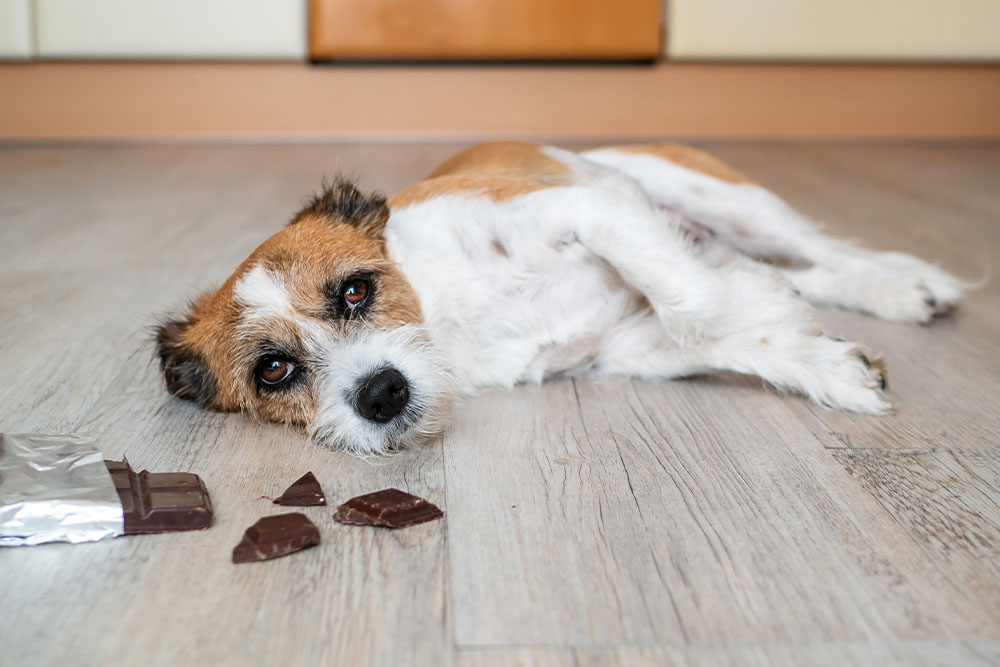
Chocolate tops the list of dangerous holiday foods. It contains theobromine and caffeine, which pets metabolize slowly, allowing toxic levels to build in their systems. Dark chocolate and baking chocolate contain higher concentrations than milk chocolate. Signs of chocolate poisoning include vomiting, diarrhea, rapid heart rate, tremors, and seizures. The amount that causes toxicity depends on the pet’s size and the chocolate type, but no amount is truly safe.
Grapes and raisins appear in numerous holiday recipes, from fruitcakes to cookies to stuffing. Both fresh and dried varieties cause acute kidney failure in dogs and cats. The toxic compound remains unidentified, and sensitivity varies dramatically between individual pets. Some animals develop kidney damage after eating just a few grapes, while others tolerate larger amounts. Because there’s no way to predict which pets will react, complete avoidance is essential.
Xylitol, an artificial sweetener found in sugar-free gum, candies, baked goods, and some peanut butters, causes rapid insulin release in pets. Blood sugar plummets within 30 minutes of ingestion, leading to weakness, collapse, and seizures. Higher doses cause liver failure. Even products labeled “natural” or “sugar-free” may contain this deadly ingredient.
Onions and garlic damage red blood cells, causing anemia. Holiday dishes often contain these ingredients in concentrated forms like powders, which are more toxic than fresh versions. Symptoms develop gradually over several days as red blood cells break down.
Macadamia nuts cause weakness, tremors, and hyperthermia in dogs. Fatty foods like ham, gravy, and butter trigger pancreatitis, a painful and potentially fatal inflammation of the pancreas. Alcohol, even in small amounts from unattended drinks or rum-soaked desserts, causes dangerous drops in blood sugar, blood pressure, and body temperature.
Understanding toxic holiday foods for pets helps you protect animals during parties and meal preparation. The ASPCA holiday safety tips provide comprehensive guidance for preventing poisoning emergencies.
Our diagnostic testing capabilities allow us to quickly assess pets who’ve ingested toxic substances and begin appropriate treatment protocols.
Creating a Pet-Safe Holiday Environment
You don’t need to eliminate holiday traditions to keep pets safe. Strategic planning and thoughtful alternatives let you celebrate fully while protecting the animals in your care.
Safe Decoration and Treat Alternatives
Anchor your Christmas tree securely to prevent tipping. Place fragile and small ornaments on higher branches where pets can’t reach them. Consider using shatterproof ornaments on lower branches. Skip tinsel entirely or reserve it for rooms pets don’t access.
Replace toxic plants with pet-safe alternatives. Real poinsettias cause mild stomach upset, but artificial versions eliminate even that risk. Lilies are extremely toxic to cats, causing kidney failure even when only pollen is ingested. Choose silk flowers or non-toxic plants like Christmas cactus or spider plants.
Cover or conceal electrical cords using cord protectors or furniture placement. Unplug decorative lights when you’re not home to supervise. Battery-operated candles provide ambiance without fire risk.
Keep human food in closed containers and dispose of scraps in secure trash cans. Remind guests not to feed pets table scraps, no matter how much those pleading eyes beg. The pet-friendly holiday tips include recipes for homemade treats that let pets participate in celebrations safely.
Prepare special pet treats using safe ingredients like plain cooked chicken, sweet potato, or pumpkin. Many pets enjoy frozen treats made from low-sodium broth. These alternatives let your pet feel included without the risks associated with holiday foods.
Our wellness care services include nutritional counseling to help you make informed decisions about your pet’s diet during the holidays and throughout the year.
Reducing Holiday Stress for Your Pet
The disruption of normal routines, influx of visitors, and increased household activity create stress for many pets. Some animals hide or become anxious, while others act out with destructive behavior.
Maintaining Calm During Celebrations
Designate a quiet room where your pet can retreat from holiday chaos. Include their bed, favorite toys, water, and a litter box for cats. This sanctuary gives them control over their environment and a place to decompress when festivities become overwhelming.
Maintain regular feeding times and exercise schedules as much as possible. Consistency provides security during periods of change. Even short walks or play sessions help pets burn nervous energy and stay regulated.
Consider using calming aids like pheromone diffusers, anxiety wraps, or background white noise to buffer party sounds. Gradually acclimate pets to holiday decorations by introducing them slowly rather than transforming your home overnight.
If you’re traveling with your pet, the stress-free holiday tips for pets cover everything from car safety to hotel stays. For pets who stay home, our feline boarding services provide a calm, comfortable environment with individualized care.
Our team receives ongoing training in Fear Free techniques to help anxious pets feel safe and comfortable. This expertise extends to helping you recognize and manage stress in your own home.
Protecting Your Pet This Holiday Season
The holidays should bring joy, not emergency vet visits. By identifying hazards before they cause harm, securing dangerous items, and maintaining routines, you create a celebration that’s safe for everyone.
At Arcata Animal Hospital, our team stands ready to help with prevention, questions, or urgent care needs. We’re committed to going the extra mile with personal touches like follow-up calls because we want you and your pets to feel like long-lost friends. Call us or schedule a preventive care visit to discuss your pet’s specific needs this holiday season.


Leave A Comment