

Not every bladder stone sends a dog or cat to the operating room, since certain stone types can be dissolved with a prescription diet. Surgery becomes the right call when the stone is a type that will not dissolve, when it is too large or too numerous to manage any other way, or when it sits close to blocking the flow of urine. That procedure is a cystotomy: the surgeon makes a small opening in the bladder, removes every stone, and sends them out for analysis so the exact mineral makeup can guide prevention. For all the worry the word surgery carries, a cystotomy is one of the most common soft tissue procedures in veterinary medicine, and most pets recover quickly and comfortably. The riskier path is waiting, because a stone that shifts into the urethra can block urine entirely, and a blocked pet is a true emergency.
At Arcata Animal Hospital, big-city veterinary medicine in a small-town setting means the full bladder stone workup and the surgery itself can happen under one roof. Our in-house lab runs the urinalysis and checks kidney health. Digital X-rays and ultrasound show us how many stones are present and how large they are, which helps us judge whether a dissolution diet stands a real chance or a cystotomy is the safer choice. Cystoscopy, using an endoscope to look into the bladder, helps us evaluate bladder health at a level most practices cannot. We perform bladder surgery for pets in Arcata with advanced anesthetic monitoring from induction through recovery. If your dog or cat is straining, leaving blood-tinged spots, or making frequent trips with little to show for it, reach out so we can take a look at what is going on in that bladder.
Stones, Surgery, and What to Expect
- Not every bladder stone means an operation, since some stone types dissolve on a prescription diet, but stones that are too large, too many, or the wrong mineral type have to be removed.
- A cystotomy is a common, well-understood surgery in which the bladder is opened, every stone is lifted out, and the stones are sent for analysis that guides prevention.
- Male dogs and cats carry the highest risk, because a stone caught in their narrow urethra can block urine completely, which is a true emergency.
- Most pets bounce back within about two weeks, and with the right food, steady hydration, and regular monitoring, many never form another stone.
What Are Bladder Stones, and Why Do They Form?
Bladder stones are hard mineral formations that build up inside the urinary bladder. Urinary stones start as microscopic crystals that appear when minerals in the urine grow too concentrated, then clump together over weeks into masses that range from sand-fine grit to a single stone the size of a marble or larger.
Several things can tip the balance toward crystals. A urinary infection changes the local chemistry, certain foods raise mineral levels, and some pets inherit a metabolism that makes stones far more likely. The acidity of the urine matters too, since some crystals settle out in acidic conditions and others in alkaline ones.
Not every stone is the same, and the differences matter. Struvite bladder stones are one of the most common types in dogs and often form in the wake of a bladder infection, while calcium oxalate stones are driven more by diet, genetics, and metabolism. Cats commonly form both of those kinds as well, plus a few rarer varieties like urate and cystine.
Because each variety responds to a different plan, our in-house lab work starts with a urinalysis that gives us the first read on which crystal type is forming.
What Are the Signs of Bladder Stones in Dogs and Cats?
The signs tend to show up at the litter box or on walks: frequent squatting, straining that produces just a few drops, blood-tinged urine, accidents from a normally tidy pet, and licking at the genital area. Many dogs and cats also seem restless or sore when they try to go.
Straining that produces nothing at all is the sign that counts as a true crisis rather than a wait-and-see problem. Because male dogs and cats have a longer, narrower urethra, a stone that slips out of the bladder can lodge there and block urine completely. A urinary obstruction like this is life-threatening, and male cats are especially vulnerable, because the bladder cannot empty and waste backs up into the bloodstream within hours.
If your pet is straining and producing nothing, crying out, vomiting, or turning weak and listless, come straight to us during our open hours. After hours, call our area’s rotating emergency service to find the nearest open hospital rather than waiting to see if things settle.
How Do We Diagnose Bladder Stones and Choose a Treatment?
Diagnosis starts with a physical exam and a urinalysis, then imaging to locate the stones. X-rays reveal most of them, while an abdominal ultrasound catches the ones that film misses and shows how many are present and how big they are. Those findings tell us whether a stone might dissolve or has to come out.
Infections often travel with stones, in both directions. Because urinary tract infections can both set the stage for certain stones and slow healing afterward, a urine culture is often added to the workup to pinpoint any bacteria that need treating alongside the stones.
Treatment then splits along stone type. Struvite stones can often shrink and disappear on a prescription diet paired with treatment for any infection, while calcium oxalate stones will not dissolve no matter what goes in the bowl and have to be removed. We move toward surgery sooner when a stone threatens to block urine flow, when stones are large or numerous, or when a pet is plainly hurting. For some small stones, especially in female dogs, we can sometimes retrieve them with a cystoscope, a slim camera passed up into the bladder, and skip the incision entirely.
| Stone type | Most common trigger | Dissolves with diet? | Prevention focus |
| Struvite | Bladder infection in dogs; diet in cats | Often | Treat infections, therapeutic diet |
| Calcium oxalate | Diet, genetics, metabolism | No, must be removed | Diet change, more water, monitoring |
| Urate | Genetics and liver conditions | Sometimes | Low-purine diet, hydration |
| Cystine | Inherited metabolic defect | Sometimes | Special diet, sometimes neutering |
What Happens During a Cystotomy?
A cystotomy is the surgical opening of the bladder to lift stones out directly, and it remains the most dependable option when stones are too large, too numerous, or the wrong mineral type to dissolve on their own. Under general anesthesia, the surgeon reaches the bladder through a small incision in the belly and removes every stone.
Once the stones are out, the bladder gets a thorough flush to wash away any grit tucked into folds or sitting in the top of the urethra, then it is closed with sutures that dissolve on their own while the abdominal wall is closed in layers. We perform soft tissue surgery like this routinely, tracking heart rhythm, blood pressure, and breathing from the moment anesthesia begins until your pet is fully awake.
A quick X-ray afterward confirms that nothing was left behind, since even one overlooked stone can seed a fresh crop. As surgeries go, this is a routine one with high success rates, and most pets are up and walking, a little groggy but comfortable, the very next day.
What Does Recovery After a Cystotomy Look Like?
Recovery is usually smooth and runs about two weeks. Plan for your pet to rest with limited activity, take the pain medication we send home, and wear an Elizabethan collar so the incision heals untouched. A little blood-tinged urine and mild straining are normal for the first few days while the bladder wall knits back together.
Set up a quiet recovery spot away from stairs and other animals, and keep dogs to short, gentle leash walks instead of free running in the yard. Cats settle best confined to one calm room. Tempting a hesitant eater with a slightly warmed meal and keeping fresh water within easy reach both help the healing along.
Call us if anything below crops up while your pet mends:
- Ongoing bleeding: urine that stays bloody or looks worse after the first few days.
- Trouble urinating: straining with little or no output can signal a blockage and needs to be seen the same day.
- Incision problems: swelling, discharge, redness, or a wound that opens up.
- Feeling off: refusing food, vomiting, low energy, or a fever.
Our team is happy to talk through the discharge instructions and book the recheck, where we look at the incision and confirm the bladder is healing as it should.
How Do We Keep Bladder Stones From Coming Back?
Preventing a repeat starts the moment the stones come out, because every one is sent to a lab to pin down which minerals formed it. That answer shapes everything after: some pets need infection control, others need more water and closer urine checks, and each stone type gets its own strategy built around food, fluids, and follow-up.
Knowing a stone’s exact mineral makeup turns dietary treatment of bladder stones into a targeted plan, since the right therapeutic food can lower urine mineral levels enough to keep new stones from forming and, for some types, even dissolve small ones.
Rechecks are the other half of the equation. A urinalysis and imaging a few weeks after surgery, and then on a schedule we set together, are the backbone of preventive monitoring that spots fresh crystals long before they harden into stones.
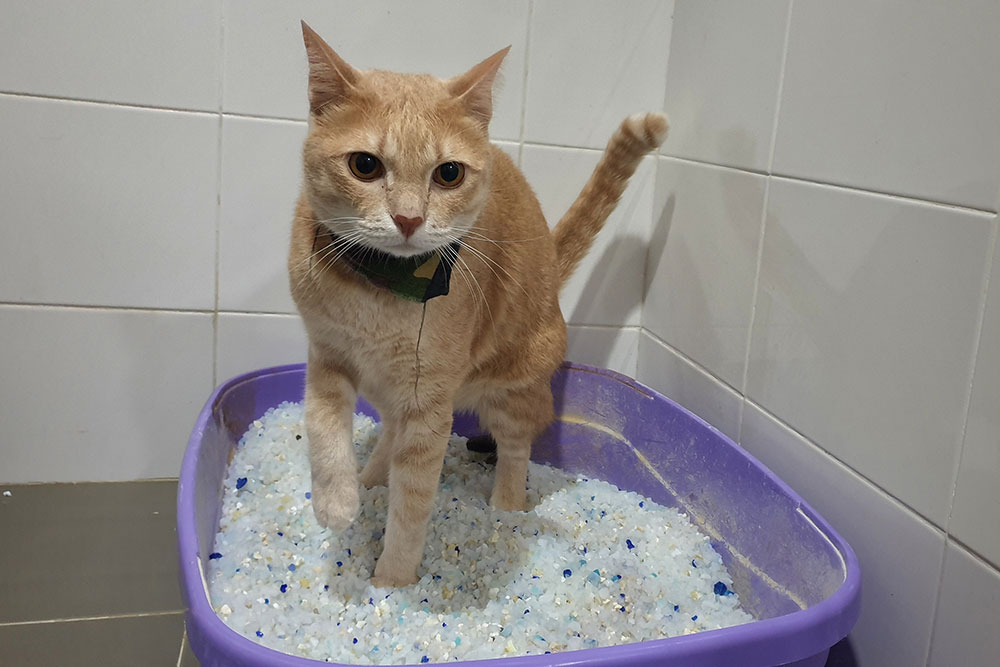
What Role Do Diet and Hydration Play in Urinary Health?
Diet and water are the two levers that do the most to keep stones from forming in the first place. A prescription urinary food controls the minerals that build crystals and shifts urine pH into a less stone-friendly range, while steady water intake keeps the urine dilute so those minerals stay dissolved instead of dropping out.
Consistency is what makes the food work. A therapeutic diet only holds the chemistry steady if it is the only thing on the menu, so even a few table scraps or off-plan treats can tip the balance back toward trouble.
Getting enough water in is often the harder half, especially for cats, who evolved to not drink water frequently. Wet food, a splash of water stirred into meals, and a running fountain all coax intake upward.
Which Pets Are Most Prone to Bladder Stones?
Some pets are simply built to make stones. A handful of breeds sit at the top of the list: Miniature Schnauzers, Bichon Frisés, Shih Tzus, and Dalmatians among dogs, along with Persian and Himalayan cats. Middle-aged animals, males, pets carrying extra weight, and any pet with repeated urinary infections or a metabolic disorder also face higher odds.
Extra body weight is one of the few risk factors you can actually influence, and the link between obesity and bladder stone formation is one more reason to keep pets trim through their adult years.
Chronic infections keep the urine primed for struvite crystals, while some metabolic conditions flood it with the raw material for oxalate or urate stones. If your pet falls into one of these higher-risk groups, regular checkups and periodic urine testing let us catch new crystals while the fix is still simple.
Frequently Asked Questions About Bladder Stones and Cystotomy
Are bladder stones painful for my pet?
Bladder stones can be genuinely uncomfortable. As they roll around, they scrape and inflame the bladder lining, which is why so many pets strain, urinate often, and pass blood. The pain climbs sharply if a stone slides into the urethra and blocks the flow, and that situation is not just painful but dangerous. The good news is that removing the stones usually clears the discomfort quickly, and most pets feel markedly better within days of surgery.
Can bladder stones be treated without surgery?
Some can. Struvite stones, the most common dissolvable type, often shrink away on a prescription diet combined with treatment for any underlying infection, which can spare a pet the operating room. Calcium oxalate and several other types will not dissolve, so removal is the only reliable fix. And any pet with a blocked urethra needs immediate intervention no matter the stone type, because that is an emergency that cannot wait for a diet to work.
Will my pet need a special diet for life?
It depends on the stone type. Some pets stay on a therapeutic urinary food for life, especially the calcium oxalate formers who have no dissolving option and rely on diet to hold the risk down. Others can ease back toward a normal diet once an infection-driven stone is resolved and the urine stays clear on rechecks. We base the call on the lab analysis and how your pet’s follow-up testing looks over time.
Getting Your Pet Back to a Comfortable, Stone-Free Life
Bladder stones are among the more manageable problems we treat. With timely diagnosis, a straightforward surgery when it is truly needed, and a prevention plan matched to the exact stone type, most dogs and cats head right back to their usual routines. If your pet is straining, leaving pink spots, or making frequent hopeful trips to the litter box or yard, please do not wait it out. Schedule a consultation and we will take a careful look, figure out what is going on, and build a plan to keep that bladder calm for the long run.